
Glute Exercises at Home: Build a Session That Works for You
Which exercises belong in your workout, and when should you make them harder? Start with a small selection you can repeat. These seven glute exercises give you options for training at home, plus a straightforward way to turn three of them into a session.
Seven options to explore. Just three movements in the sample session.
Work within a position you can control before adding more challenge.
A steadier repetition is something you can build on next time.
Give your session a job
Your glutes help move and control the hips. Squats, bridges and sideways leg movements offer different ways to challenge them.
Begin with a comfortable range. Clear some floor space and use a mat if it helps. Spend a few minutes walking or marching, then rehearse easier versions of your chosen exercises. The movements below are options, not a checklist you must complete.
Seven glute exercises to choose from
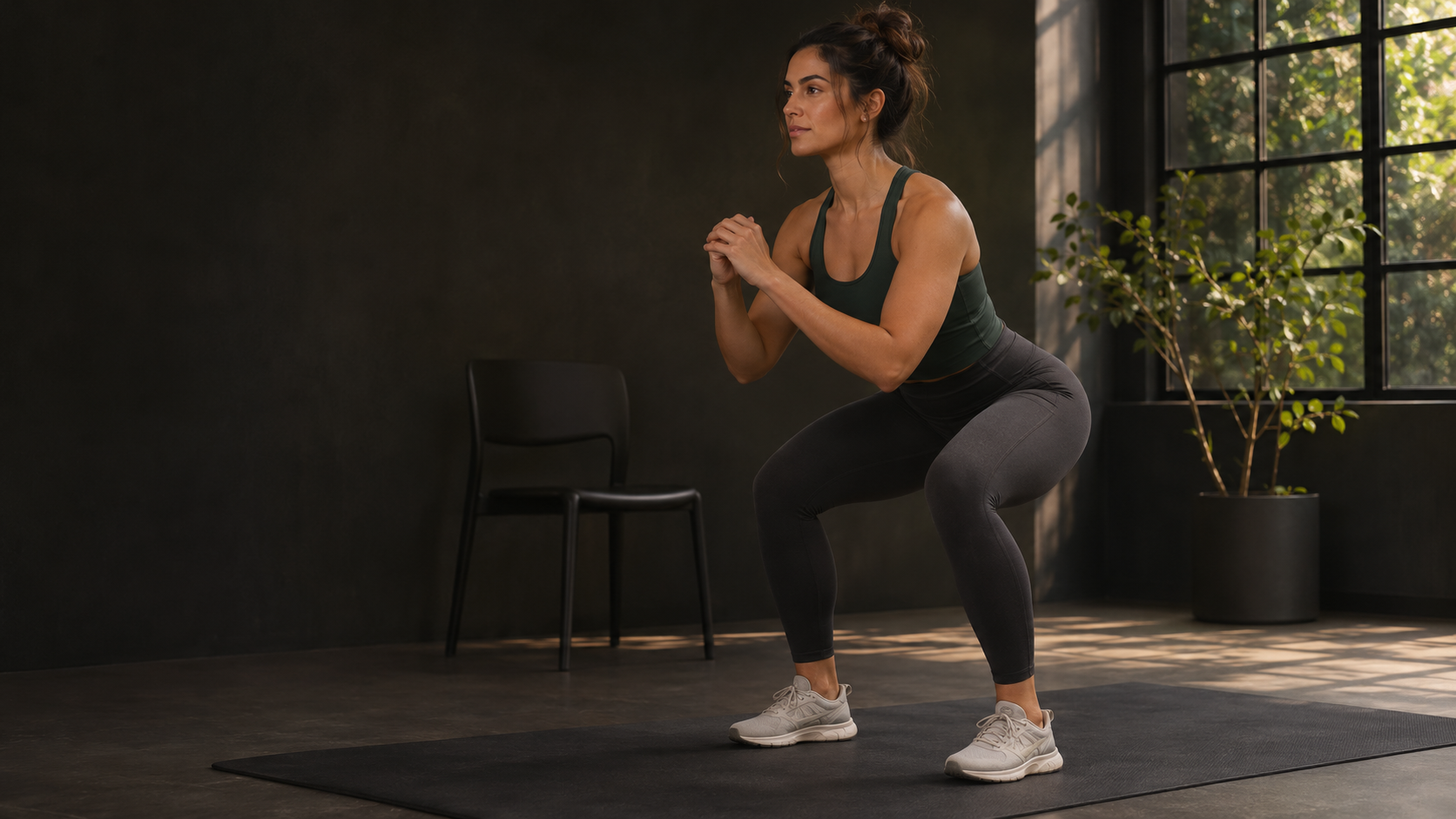
1. Bodyweight squat
Stand with your feet at a comfortable width. Bend your knees and hips together, allowing your torso to incline naturally. Keep your heels grounded and your knees moving in the direction of your toes. Push through your feet to stand. Begin with a shallow squat or use light wall support if balance is the challenge.
2. Hip hinge
With softly bent knees, send your hips backwards as your torso tips forward. Keep your back in a comfortable neutral position and bring your hips forward to return upright. Think about closing a drawer behind you with your hips. Practise a small range first; reaching the floor is not the goal.
3. Reverse lunge
Step one foot backwards and lower only as far as you can control. Keep the front foot planted, then press into it to return. Switch sides. A shorter range or a hand against a wall can help while you learn. Choose another exercise if this movement causes discomfort.
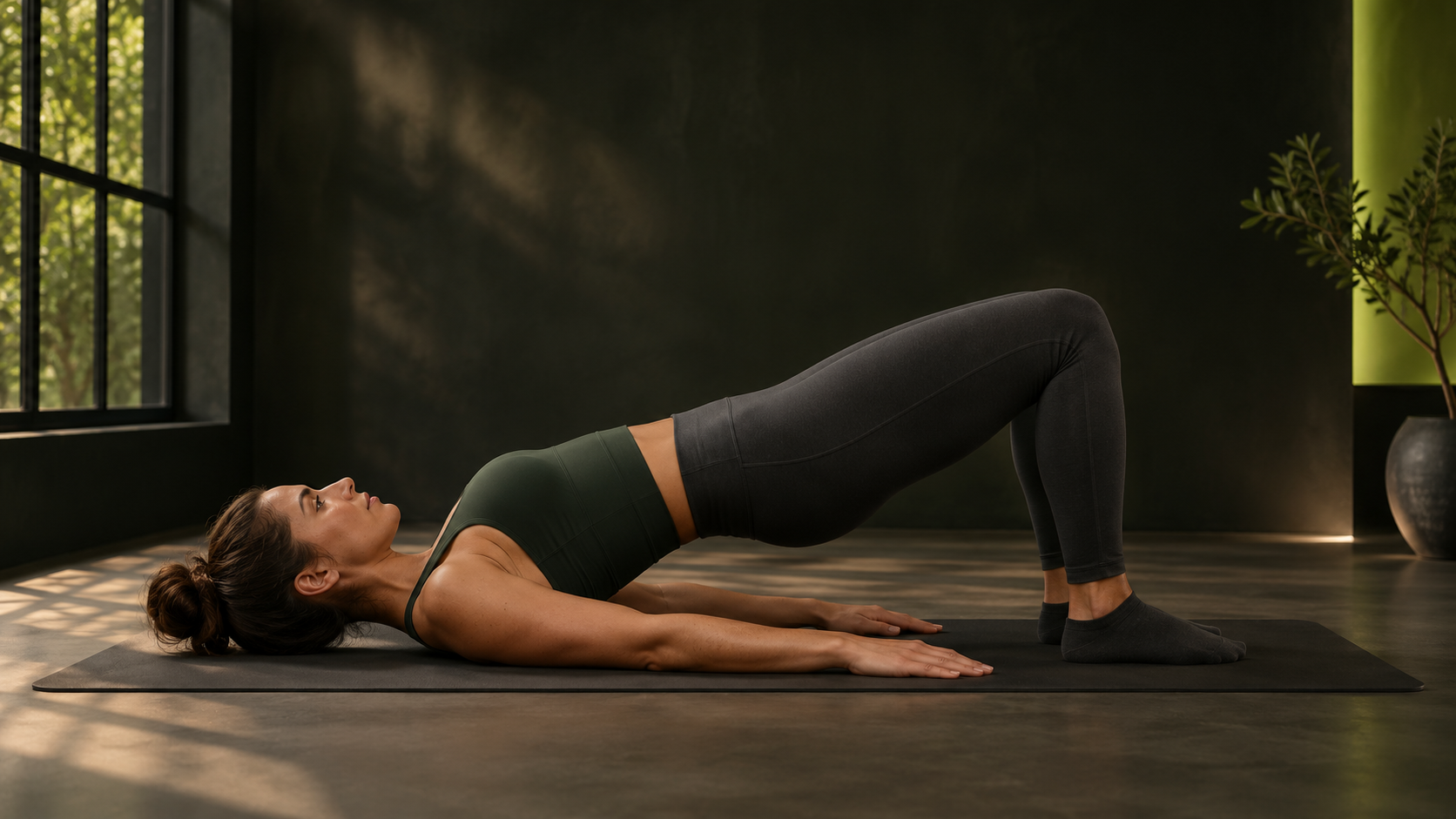
4. Glute bridge
Lie on your back with knees bent and feet flat. Gently brace your middle, then press through your feet and raise your hips. Stop before your lower back starts to arch; slowly lower again. A smaller lift with a steady trunk is preferable to chasing height.
5. Side-lying leg raise
Lie on your side with your hips stacked and the lower leg comfortably bent. Lift the upper leg a modest distance, keeping the foot generally facing forward. Lower without rolling your pelvis backwards. Use a smaller movement if your waist or trunk starts doing the work. Repeat on the other side.
6. Bent-knee hip extension
On hands and knees, place hands under shoulders and knees under hips. Keep one knee bent as you gently lift that thigh behind you. Stop before your back arches or your pelvis twists. Return slowly and switch sides after your set. The useful range may be quite small.
7. Standing side leg raise
Stand tall, using a wall for light support when needed. Move one leg sideways without leaning your body the opposite way, then bring it back. Keep your toes generally forward and the movement controlled. Practise each side. This offers an upright option when floor exercises do not suit you.
Build a workout from just three movements
For a manageable first example, choose the squat, bridge and side-lying leg raise. Try one or two sets of six to ten controlled repetitions per exercise, using fewer if needed. For the side-lying movement, complete the repetitions on each side. Rest for roughly 45–90 seconds between sets, or longer until you feel ready.
Two nonconsecutive days per week can be a practical starting schedule. This is an example to adapt, not a personalised prescription. You can begin with one set of each exercise and write down what felt comfortable. Leave enough room to recover before repeating the session.
If getting down to the floor is awkward, consider the standing options instead. You can still work towards a useful session without forcing an unsuitable position.
Adjust the movement, then judge the effort
If a bridge mainly feels like back pressure, lower the lift and check whether your ribs and pelvis stay controlled. If a side leg raise turns into a whole-body lean, reduce its range. If a squat becomes a balance test, add support. These adjustments help you practise the intended movement.
Muscle effort does not have to produce a dramatic burn, and next-day soreness is not a score. More useful notes are whether your last repetition stayed controlled and whether you can repeat the session comfortably. Stop rather than pushing through sharp or increasing pain.
Keep one small progression in view
When your current version feels comfortable and remains controlled, add a repetition or two within your chosen range. Later, add a set or try a more demanding variation. Change one thing at a time so you can recognise what works.
Bodyweight glute exercises are a convenient start, but their challenge has limits. If a movement becomes very easy, simply repeating it faster is not always useful. A suitable progression or added resistance may eventually be needed. Match that decision to your goal and ask for guidance if you are unsure.
Keep expectations realistic: these exercises do not selectively remove fat from the hips or promise a particular body shape. Build a practice you can sustain rather than measuring each session against an image.
Choose a starting point that suits your body
For persistent pain, a recent injury or a health condition that affects exercise, get individual advice before following a new routine. Stop for dizziness, chest discomfort or unusual breathlessness and seek medical advice for concerning symptoms. Seek urgent medical help for severe or persistent chest symptoms, or severe difficulty breathing. An online exercise description cannot assess your movement or symptoms personally.
Ready to follow a coached session?
Try Gibril’s free 10-minute full-body workout with a lower-body focus. It gives you a way to experience TRYN Studio without registering. The session is coached in English.
For more training options, explore the TRYN Studio workout library. All TRYN Studio training is in English. Choose your next session around your time, equipment and current capacity; you do not have to master all seven exercises before you begin.
Questions you might have
Do I need all seven exercises in one glute workout?
No. They give you a selection of movement options. Starting with three exercises can make technique and progression easier to follow.
Can glute exercises be useful without weights?
Yes, bodyweight exercises can provide a manageable starting challenge. As you get stronger, you may need harder variations or added resistance to continue progressing towards your goal.
How often should I train my glutes at home?
Two nonconsecutive sessions per week are a practical example to start from. Adjust the amount to your other training, recovery and individual needs.
Meet your next ten minutes.
10-minute full-body session · lower-body focus · English coaching · no sign-up
Try a session with Gibril