
HIIT Workouts at Home: Choose Your Exercises, Pace and Recovery
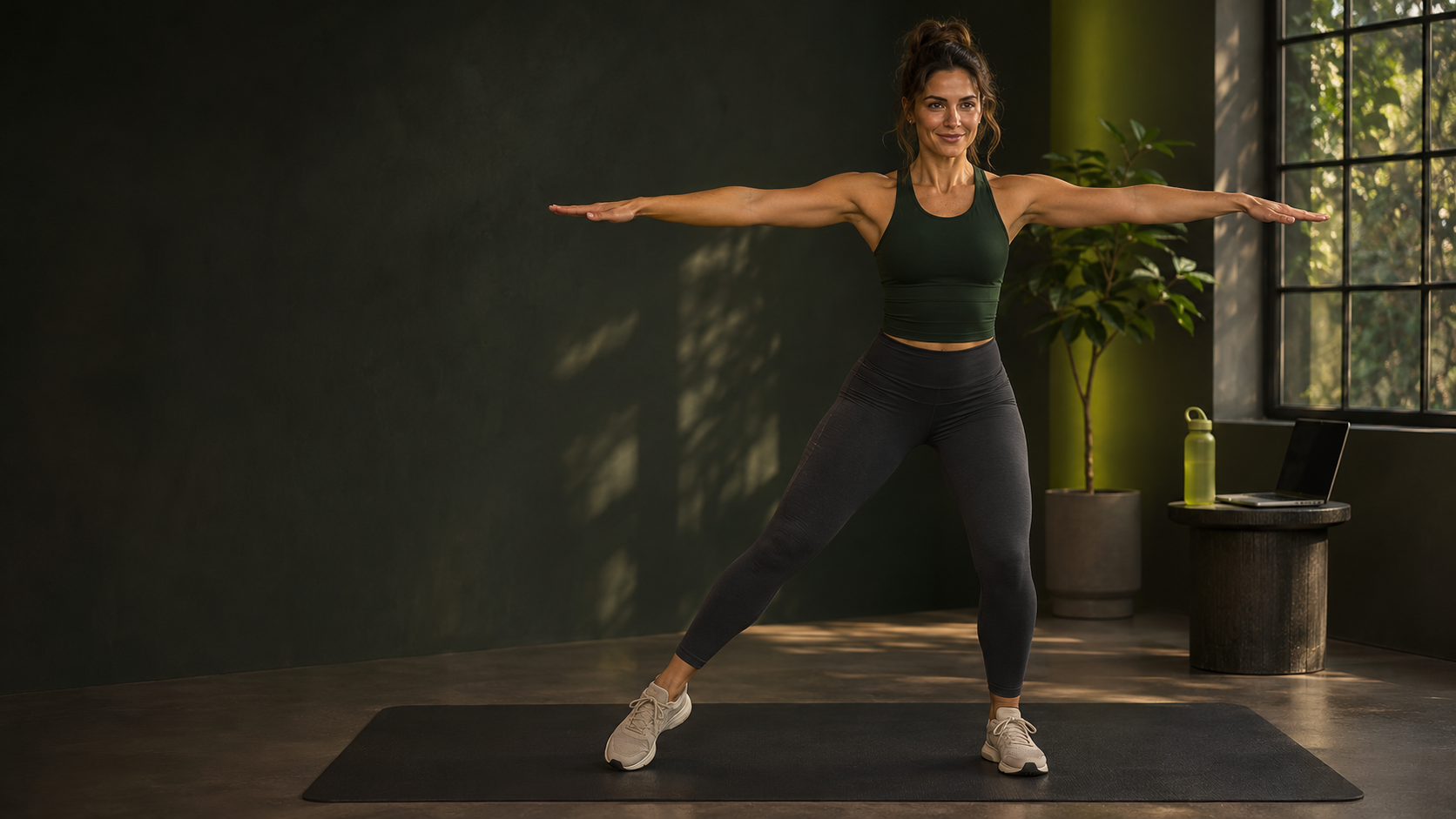
You have a short window to move, a small patch of floor and no interest in turning your living room into a gym. A home workout can fit that situation. The useful question is how much effort belongs in it. This guide helps you understand HIIT, practise a simple interval format and choose a pace you can control.
Choose a session you have room for, with time to warm up and wind down.
Keep one foot grounded. Quiet movement can still be purposeful.
Give yourself the pause you need before starting another round.
A timer sets the rhythm. Your effort defines the workout.
A HIIT workout alternates genuinely demanding exercise with easier recovery. The hard sections ask enough of you that you could not comfortably maintain that effort for long. Between them, you deliberately slow down or rest.
Twenty seconds of movement followed by forty seconds of recovery is simply a format. At a moderate pace, it is an interval workout. That can be an excellent place to begin. You do not need to make every session high intensity for it to count.
Before trying harder intervals, get familiar with the movements and build a regular foundation of manageable activity. High intensity should be appropriate to your current fitness, rather than an attempt to match someone on a screen.
Make the space easy to use
Clear enough room to step sideways and lift your arms without hitting furniture. Check the floor for slipping hazards and put your screen where you can see it without twisting. Keep water within reach. A stable surface matters more than a perfect-looking setup.
If you share walls or have people downstairs, choose movements that keep at least one foot on the floor. You can change pace without adding jumps. Rehearse each movement slowly before you start the timer; this first minute of preparation saves decisions during the session.
Try an 18-minute introduction to intervals
This example is a moderate introduction for generally healthy adults, not a promise of a full HIIT session. Choose a comfortable pace and shorten it when needed. During the movement sections, you should still be able to speak in sentences.
| Part | Time | What to do |
|---|---|---|
| Warm up | 5 minutes | Walk or march easily, move your arms and gradually rehearse the four exercises below. |
| Practise intervals | 8 minutes | Eight rounds of 20 seconds of movement and 40 seconds of easy movement or rest. |
| Cool down | 5 minutes | Reduce your pace gradually, then settle into relaxed breathing and comfortable movement. |
Work through the four movements below twice. The eight minutes include recovery. If you need additional rest, take it; the clock is a guide.
Four movements, with room to adjust
- March in place. Lift one foot at a time and let your arms swing naturally. Begin with low steps, then find a steady rhythm.
- Step jacks. Step one foot out and back, then alternate sides. Raise your arms only as far as comfortable. Keep the movement quiet rather than jumping.
- Alternating knee lifts. Lift one knee, lower it and switch. Stay tall without leaning backwards; a smaller lift is a valid option.
- Controlled shadow boxing. Use a comfortable stance with softly bent knees. Reach your fists forward alternately, without forcefully locking your elbows or adding weights.
Use the recovery sections to walk slowly or pause. If one exercise feels awkward, repeat a movement you can perform confidently.
Make the next session clearer before making it harder
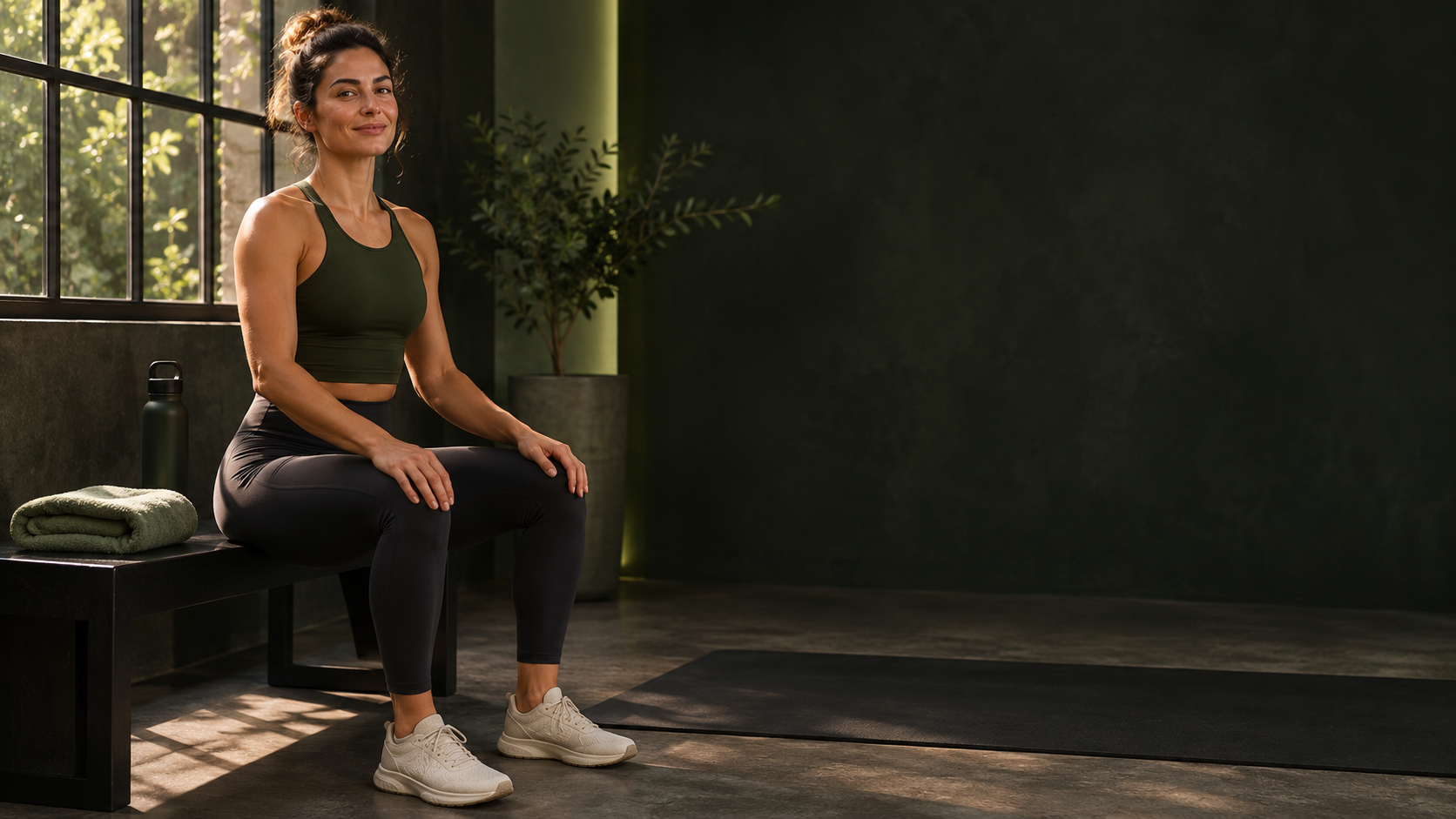
Afterwards, note what interrupted your rhythm: an unfamiliar movement, insufficient recovery or an ambitious pace. That gives you one useful adjustment for next time. Repeating the same session with better control is progress too.
When moderate intervals feel familiar and harder exercise is appropriate for you, increase only one variable at a time. You might move more briskly while keeping the recovery unchanged. Genuine HIIT needs a clear contrast between strenuous work and easy recovery; it does not require an all-out sprint.
If movement quality deteriorates, ease back. A more demanding label is never a reason to ignore your capacity.
Leave space for the rest of your week
Once you are ready for harder intervals, one or two such sessions per week, with a recovery day between them, can be a conservative starting example. Your overall activity, health and recovery determine what fits.
Keep room for strength work and easier activity. A busy week might include one interval session, a separate strength session and walks when convenient. Place the demanding workout where you can arrive reasonably rested, rather than squeezing it into the most exhausting day.
Have an answer for the difficult days
- Very little time: reduce the number of intervals while keeping a warm-up and gradual cooldown.
- Too much noise: return to stepping movements and a smaller range.
- Recovery feels rushed: extend it. Starting the next round is not an obligation.
- Low energy: choose a gentler session or a rest day instead of trying to rescue the plan through intensity.
Stop if you develop pain, dizziness, chest discomfort or unusual breathlessness. Seek medical advice for concerning symptoms. Seek urgent medical help for severe or persistent chest symptoms, or severe difficulty breathing. If you have a health condition, are recovering from injury or are unsure whether vigorous exercise is suitable, discuss that before beginning HIIT.
Let your next workout be a simple decision
Want to experience training with Gibril? Try TRYN Studio’s free 10-minute full-body workout with a lower-body focus. It is available without registration and is coached in English.
You can also explore the workout library and look for a session that suits your available time and equipment. TRYN Studio training is in English. The right next session is one you understand and feel ready to begin.
Questions you might have
Can I do a HIIT workout without jumping?
Yes. Jumping is not what defines HIIT; the level of effort and the recovery pattern do. Choose suitable movements and build up gradually. A stepping session at moderate effort remains useful interval training.
Is the 18-minute example a beginner HIIT workout?
It is an introduction to intervals at moderate effort. It becomes HIIT only if the work periods are genuinely high intensity, which may not be appropriate for a beginner.
Should I shorten every recovery as I improve?
No. Recovery needs to support the quality of the next work period. You can progress the pace or exercise challenge while keeping, or even extending, the recovery.
Meet your next ten minutes.
10-minute full-body session · lower-body focus · English coaching · no sign-up
Try a session with Gibril